

We sat in a car park in her Northern Beaches suburb, down the road from her house and not far from the bottle shop where she works at her day job. She’s also studying nursing ‘in case music doesn’t work out’.
I talked with Arielle (TikTok: @ariellevs), a young indie-folk musician currently in the process of producing a debut single with a notable record label. She’s worked small local gigs and played at one major Australian music festival.
Her experience trying to break out as an artist has been ‘really difficult’, as she said simply. ‘I think the biggest thing with being in Sydney is everything moves really slow. When I first got discovered… it took a month for them to find somebody willing to work, especially with an underground artist.’
‘I think the biggest thing with being in Sydney is everything moves really slow.’
But as she also identifies, ‘if I were in, you know, LA or New York… it would have probably happened within a week… It’s easier to succeed overseas, for sure, I don’t necessarily know if overall success is impacted, but definitely the time it takes to be successful.’
She’s not imagining it. Look at The Kid LAROI, he was coming up locally, but it wasn’t until he moved to the US where he took off.
Arielle thinks it was luck that got her picked up by a label, and it's luck that a lot of artists haven’t had. Making it in Australia is a slow, often painful process, something that many can’t stomach or afford. The draw to the faster-paced scenes of the US has made many Australian artists leave the lucky country.
This privilege – the privilege to stay in Australia and continue creative work – is now unaffordable. It sucks, but that’s the reality.
This privilege – the privilege to stay in Australia and continue creative work – is now unaffordable. It sucks, but that’s the reality.
Artists are feeling the burn long before they get calls from labels. ‘When you’re hiring a musician,’ Arielle explains, ‘you’re not just paying them for the work they're doing in the moment, but the work it takes to write those songs or to practise and learn… and then the equipment, that costs a lot of money.’
Getting seen can cost you
The opportunities to work as musicians have taken a hit post-pandemic, from live music spots struggling to festivals like Splendour in the Grass and Bluesfest. But she also points out another problem. ‘Australia doesn’t have many festivals that, you know, cater for smaller artists… so when it does they’re often in rural places or places far away from you.’
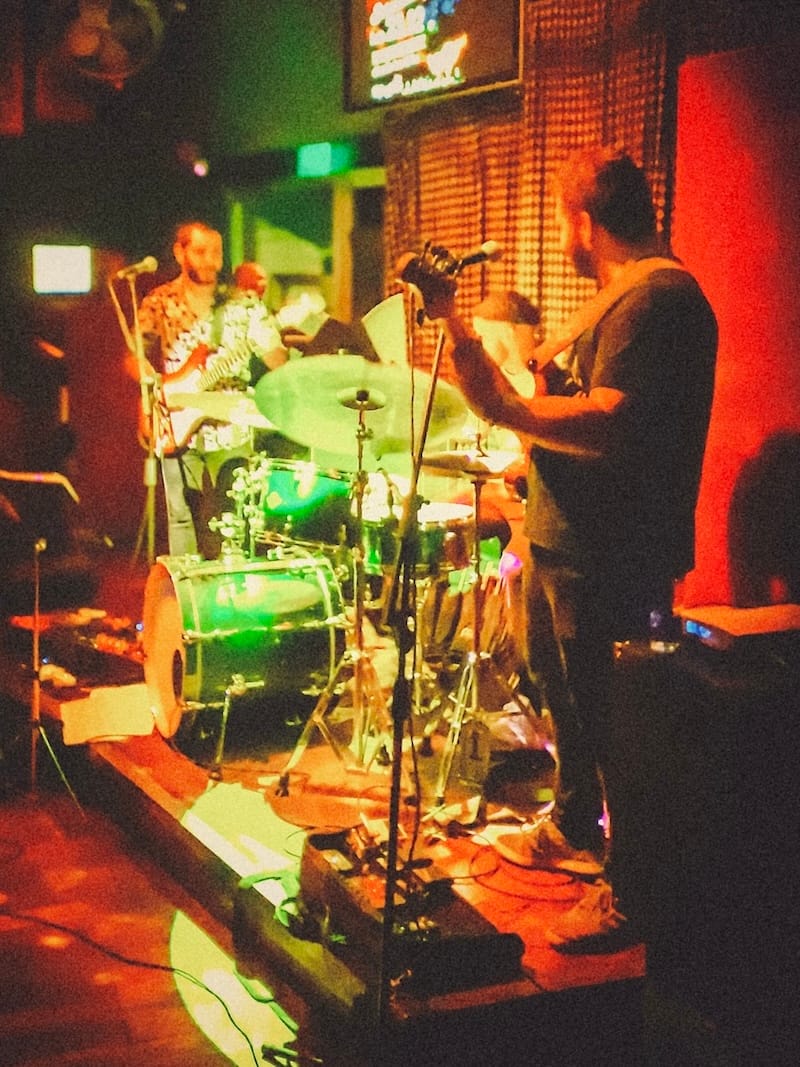
In her own experience, she had to fly to the festival where she played, costing more than she was paid. She explained that in that instance, it was more about exposure than being paid. ‘It’s about making the right people see it… if you don't have connections in the music industry, it's really hard to make them, especially here.’
If you don't have connections in the music industry, it's really hard to make them, especially here.’
But American labels don’t reciprocate that interest towards the Australian music scene. ‘I picked up the phone [call from a talent scout] and said, “Hey, how you going?” and they instantly went, “Where are you from?”’ Arielle recalls. She told them she was from Sydney, to which they said ‘“The Sydney music scene is weird, I don’t know how it works over there.”’ The call came from a notable label, one of the few that Australian musicians have to look towards for global recognition.
Why people leave Australia
This isn’t just impacting Arielle. In a 2023 Musicians Australia survey by the Media, Entertainment & Arts Alliance (MEAA), 49% of musicians earned less than $5,999 from the music industry during the 2023 financial year, and about 67% were forced to take up work outside the industry. A lack of income is the main concern for most of the musicians surveyed. MEAA says insecure work and poor pay are forcing musicians to ‘hang up their instruments’.
Australia has some of the lowest government culture spending in the OECD, below average. Where other nations might have generous artistic support programs, Australia has largely left its arts sphere to fend for itself. To the prospective and ambitious artist, it only makes sense to pack your bags for another country that can support your practice.
How to back artists here
But it’s not just the lack of industry or government interest, Arielle points to the personal interest of those around here. Cultural cringe: the subconscious devaluing of Australian culture. Cultural cringe has been linked to our colonial past, making us think it's better to consume culture from ‘proper’ countries rather than support our own.
We claim The Kid LAROI like a win, but only once he’s already gone global.
‘I think it can really be distressing almost to see somebody step outside of what's considered normal and it can be embarrassing to be associated with somebody who does that.’
So what do you do with that? More scouts, Arielle suggests, but on a grounded note: ‘go to more gigs, go to ticketed gigs… if the artist does it off Bandcamp, that's good because you can purchase the song from them.’
Making artists feel at home in Australia doesn’t have to be a grand thing. I’m on a funk and soul kick, a genre dominated by America, but in the wonderful age of the internet, it takes only minutes to find Australian bands. I left the interview listening to Mayfield, a Melbourne-based funk band.
Our artists are suffering from so many angles, but it can be something so small that can go a long way.