

You hosted BLK.OUT recently, what does that event mean to you?
This event was basically for the South African diaspora that’s in Australia. We don’t have a lot of our culture stuff actually happening, and if they are happening they’re not being done the right way, and on top of that, we’re building a community. For me specifically, I’m helping build a community where I am performing these songs that are integrated with these South African sounds that resonate with the South African community that we’ve been kind of helping nurture, and low-key like a little bit of an exposure therapy type of thing going on, exposing them to me, and making sure that whatever has to do with South Africa, it’s being done by South Africans and being done correctly.
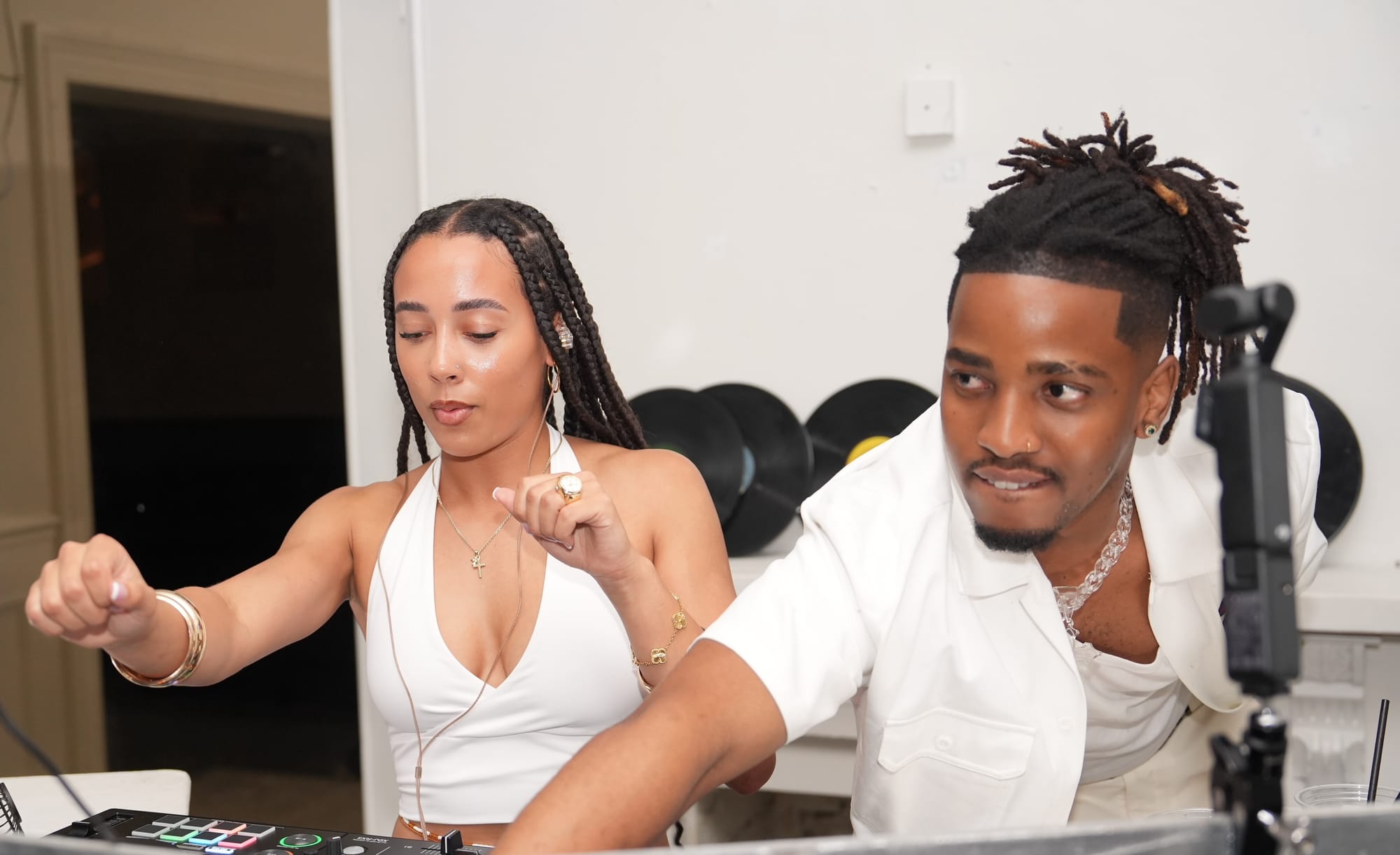
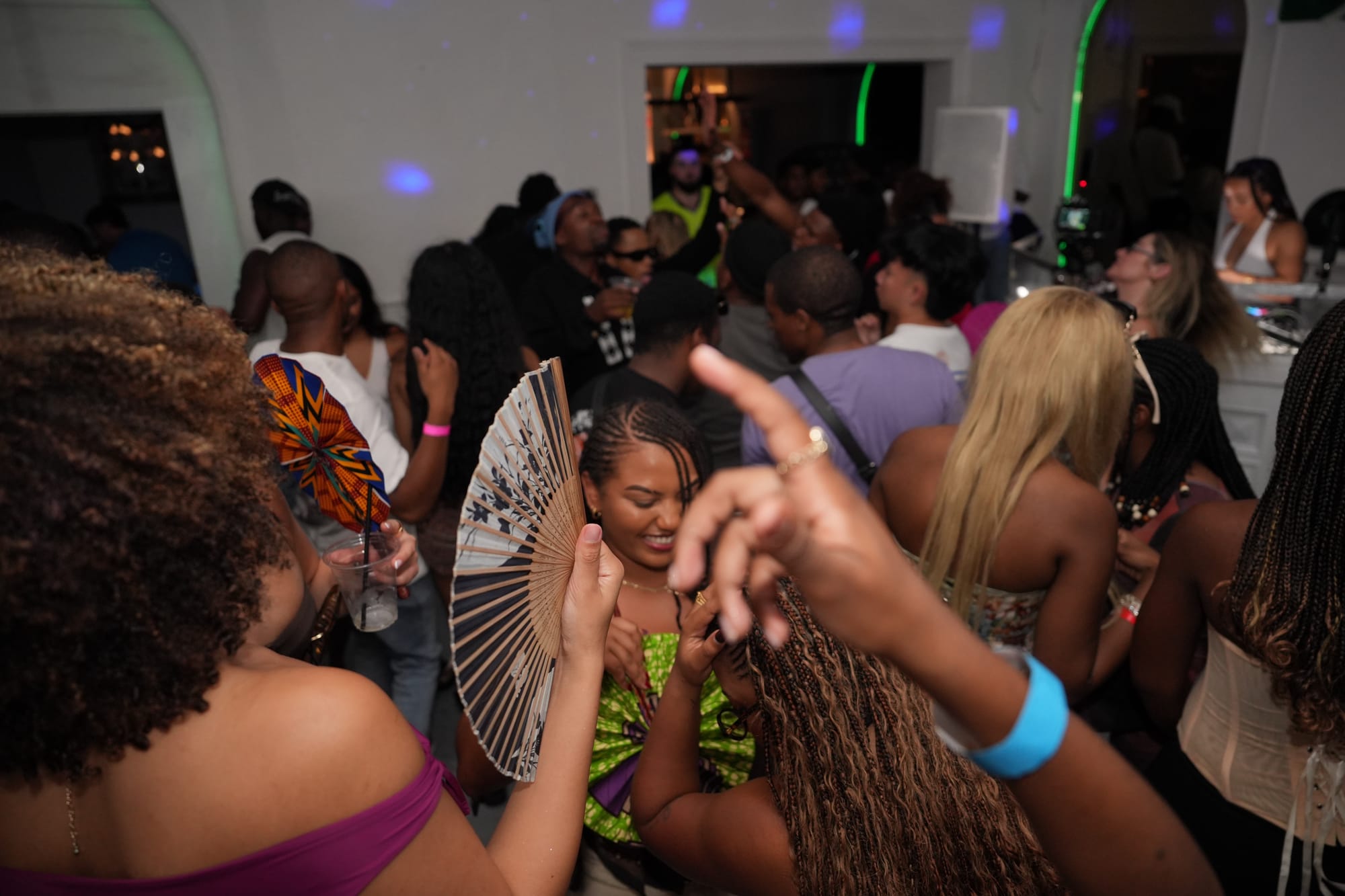
There was a previous event that happened and it was a South African headline, like a very, very big South African headline, and it was kind of run poorly. There were no South Africans in the line-up, and the South African community went into an uproar, which is so fair. I really wanted to go, but because of the location or the line-ups I didn’t really feel like going, and it’s off-putting because it’s kind of like you’re not doing the culture justice. It’s like, how are you gonna put on a South African event and then support somebody from the Middle East and leave all the South Africans out of the equation. So what we’re trying to do is not have that happen, we’re trying to build a platform.
What did home sound like and who controlled the music?
Growing up I listened to various types of music. I didn’t grow up in Australia, I grew up in South Africa – which was a little bit different because we’re, you know, a very culturally heavy country. And I did live in essentially a broken home, I don’t want to say broken home, but like a broken home, with my dad at times, lived with my mum at times, and it was always different music.
Sometimes in my dad’s house you can hear pop…and he could switch it up, play some Tupac or hip-hop, like the old-school hip-hop, and then he’d play this genre called Maskandi. It basically translates to ‘the guitars’ because that’s what it is, it’s a Zulu genre.
And then I’d go to my mum and do something similar, but I’d be listening to music from Brenda Fassie. I don’t know if you’re familiar, I don’t know what to call that genre, but it’s one of those big South African genres. And then she’d pick it up and play Nicki Minaj, Rihanna, Beyoncé. So it was just all over the place, honestly. And I feel like what stood out a lot more to me was 50 Cent.
I also have a distinct memory of eating noodles in front of TV, listening to Westlife.
I also have a memory of listening to 50 growing up, his impact was huge.
Yeah, Get Rich or Die Trying is also a very distinctive memory for me. Basically the album had that sort of influence, the album and the movie, and just 50 being 50.
Mum also had to go get the same Mercedes, and we had the car for a few years.
How did that mix shape what you make now, and when did Zulu start showing up in your rap?
Yeah. That’s more of a recent thing.
The best way to explain it, I don’t want to say I got tired of what I was necessarily making, but I wanted a change, something to make me stand apart. And I was like how can I be different, to represent where I’m from and who I really am. And the third one was basically for me, me practising, adding Zulu and all these other South African components in my music is a way to get me further connected to what I left behind, essentially.
Is there anything you see artists doing right now that you refuse to do?
Everybody’s hopping on this underground hoodtrap wave. Personally I don’t see myself doing that because it feels like I’m being a sheep and riding some whole ass other wave when I’m trying to create my own.
You see a lot of artists tend to shy away from their original root sounds and just start trying all these different things just because they’re popular. Never me.
If you had to sell your live show in one moment, what’s the scene you would describe?
I like to think when I’m performing, like me personally, even outside of performing, I’m just like a bubble, you feel me? Not like a soft bubble, I’m just filled with so much air and excitement, and I’m not necessarily boring to be around.
There’s always something exciting happening.
You can definitely see that on stage. I like to bring that energy that I have wherever I am, and kind of just tend to engage with the crowd and maybe make a joke here or there. Just bounce off the crowd because at the end of the day, I’m performing for them. And if I’m doing something and they’re not feeling it, and I can read that they’re not feeling it, I have to tweak something as I’m doing it.
What’s the most memorable show moment you’ve had, something that stands out?
Memorable moments aren’t necessarily from my own sets. It’s when I would step on stage with DEVAURA. DEVAURA is already an amazing performer herself, and then you add me and DEVAURA on the stage together and we’re performing ‘Ketamine’, the crowd just always goes crazy and just loves what they’re watching. And the coolest reception I can pinpoint right now is from Laneway 2025. First time performing at a festival, and we’re doing ‘Ketamine’ and the crowd is going crazy, and they’re singing the lyrics. I was like, wow, at a festival? It was during the day, so it wasn’t packed all the way to the back, but there was a big number of people in that crowd. I was just like, wow.
Definitely gnarly. It set me up for 2025 for sure.
You’ve got Scandinavia on the horizon for 2026. Why Scandinavia?
Until it was brought to my attention by the team, I hadn’t necessarily thought about it. But what we’re working towards is taking this sound that I’m working on, which is a South African sound, and building it here, just to take it overseas where there’s an already established place for this type of music. You know, like Amapiano, Gqom, Afrobeats, and it’s big and rich and growing. And being invited to come out that way, for me, it was surreal. It put that battery on our back to work towards this campaign, which is Journeys of a Zulu Boy, because the end goal is going to be that Scandinavian trip, Scandinavian trip slash tour.
What can people expect from you in 2026, singles, an EP, LP?
In works with Journeys of a Zulu Boy, there are maybe max two tapes coming out in 2026. There’s another EP, like little tape, just like Aries, but this one is with the completely new reinvented sound. It’s not mainstream. There’s not necessarily a lot of artists on this sound, and I’ve found a way to pioneer something different and make it mine. The tape is called Count Me Out.
The public already have two singles. There’s another coming out soon and that’s with VV-Ace. So that’s three singles building up to the tape, consisting of the new sound.


