
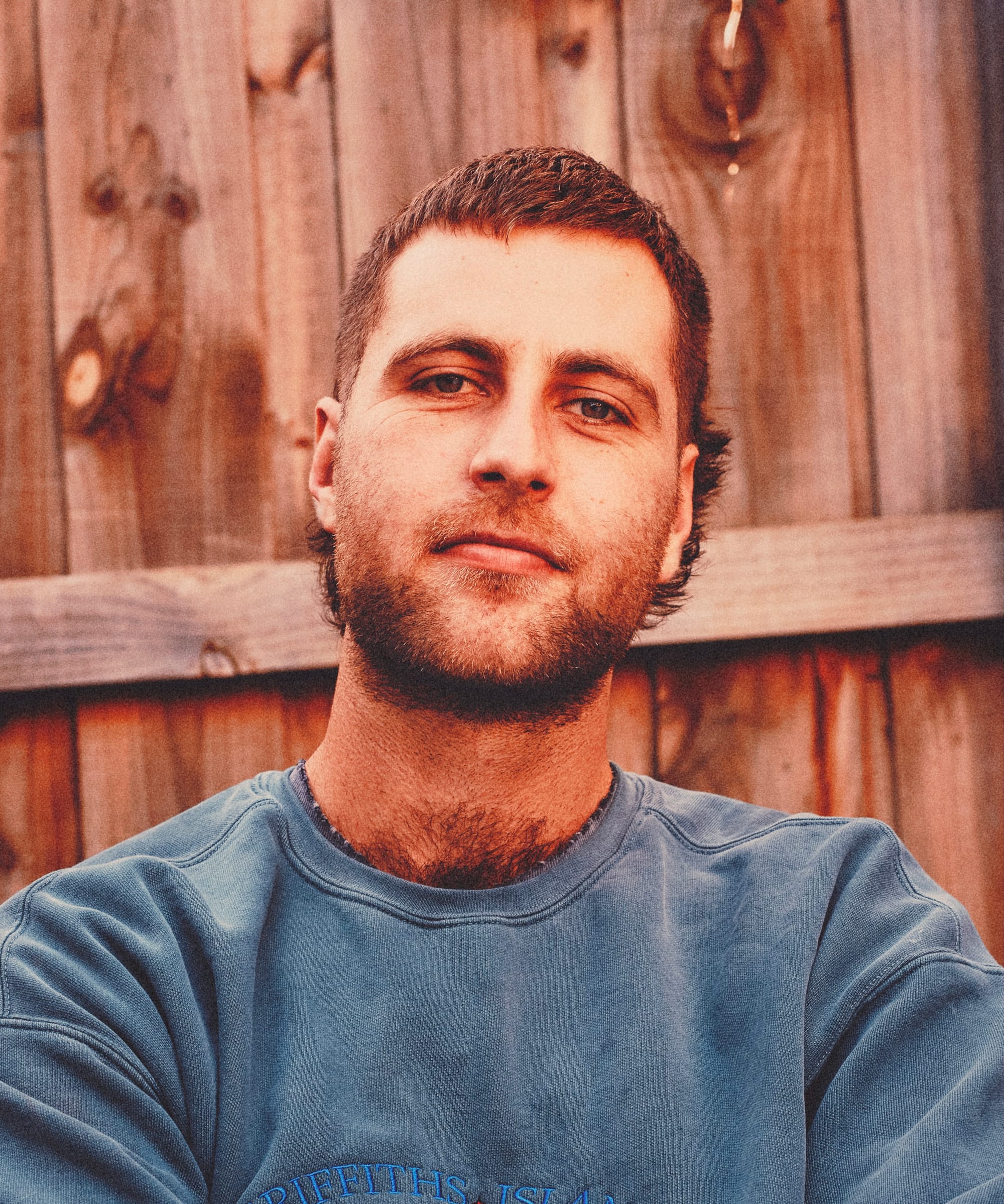
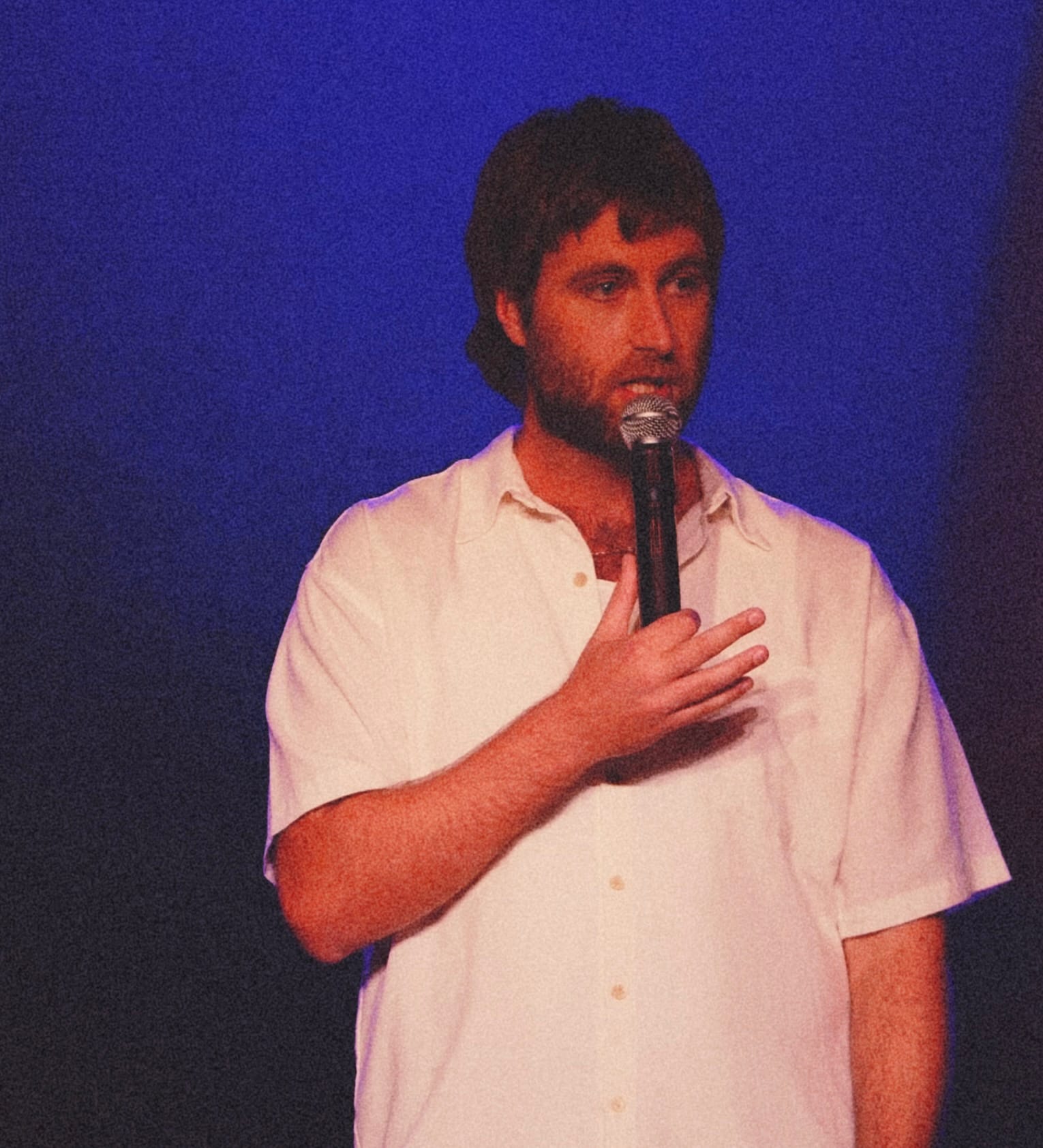
Lewis Garnham is coming back home for the 2026 Melbourne International Comedy Festival season after moving to London last year. After a sell-out run last year, he’s returning with a limited run of work-in-progress shows – slightly different each night. If you’ve seen him before, you know what you’re in for. If you haven’t, now’s the time.
We caught up with him to talk about telling jokes in London versus Australia, the existential edge of his comedy, why making a living as a comedian is getting harder and who he’s excited to see perform in 2026.
You moved to London recently. What’s changed in your comedy?
Yeah, it’s been good. I’m still adjusting. I think the comedy over here is more fast-paced than what I do, so at some of the bigger comedy clubs I feel like I need to get to the punchline quicker.
I’m quite slow and a bit dopey, and... I take my time getting to things, and it feels like that’s kind of a metaphor for London in general. It’s just more fast-paced. There's more people. There’s more competition. People are busy. So there’s that pressure of: ‘All right, get to the laugh.’
I’m trying to adjust to that without losing my voice in it. I don’t want to completely change my style because of it. I'm just trying to find a middle ground.
Have you had to retire any material that killed in Australia but didn’t land overseas?
Yeah, definitely. There’s definitely stuff that doesn’t work here, for sure.
And it’s weird: it’s the ones you don’t expect. Some of my most solid stuff in Australia just doesn’t work here.
I’ve got one routine I used to do about going to the drive-through and because I’m in London, and maybe in other parts of the UK it might work, but in London there’s no drive-through fast food like that. That doesn’t exist. And I think something gets lost in the storytelling of that joke. They just sort of don’t go with me.
I think it’s purely because they don’t really have drive-throughs in London. They don’t have, like, a drive-through Macca’s as a ubiquitous thing.
Interesting. So there’s nothing to grab onto, no shared point of reference. Like: ‘Oh yeah, that’s happened to me.’
You’re walking such a fine line; it’s a game of inches. And if there’s that half-second where they have to go [Lewis mimes a little mental detour], ‘Drive-through McDonald’s… oh yeah, I went to one of them when I was in Greece two years ago,’ you’ve already lost them, because they’ve had to do that slight amount of processing, so the momentum is lost for that person. It's so finite, your window of attention span, I think.
To me, your comedy has an underlying existentialism. How would you describe your comedic style?
I think since I was young, I’ve been like, ‘What the fuck is this?’ about everything. I’ve been doing comedy for about 12 years, and in the beginning I didn’t connect with that. But in the last four or five years I’ve connected a lot more with that part of myself – that existential part. I think I've just connected with that more and more.
I try every year to do something slightly different, which is challenging, but also add to what I’m doing. A few years ago I really focused on storytelling, less on telling jokes and more like: ‘This is a story that means something to me; can I make it work on a comedy stage?’ I worked on that for a year or two.
Then I started working on: how existential can I be? How much can I sort of ‘lose it’ – for want of a better word – on stage and still have it be funny? Can I go through the things giving me anxiety and break them down?
And now, at the moment, what I’m working on is kind of a middle ground between those two things. It’s less chaotic but still existential, and it’s storytelling, stories that make me reflect on the big questions about life: what the fuck are we even doing here? All that sort of shit.
What can we expect from your show in Australia?
This season in Melbourne is going to be a work-in-progress season. I’m still going to be figuring stuff out while I’m on stage. It’ll be funny and it’ll be good, but it’ll be changing every night, which I’m really excited about.
For the last nine years or so, I’ve written a new hour every year. I’ve really enjoyed doing that, and it’s pushed me, but this year I just felt like I can’t turn around a polished hour by comedy festival.
So now I’ve got my sights set on 2027. I’m going to spend years on it. I’ll probably end up writing two shows in that time. There’ll be different material coming in. But the one I end up with in 2027, that I end up touring as a finished show, will hopefully be the best show I’ve ever done. That’s my goal.
But the one I end up with in 2027, that I end up touring as a finished show, will hopefully be the best show I’ve ever done. That’s my goal.
I want to do something really special – a culmination of all the stuff I’ve been working on over the last five or six years: different styles, techniques, everything.
How do you spend your life off stage? What does a day in the life of a comedian look like?
I’m always writing stuff – whether I use it or not. I love writing, and I’ve realised in the last few years that if I’m not writing, not just stand-up, but anything, like journaling or short stories, it's the biggest factor in my mood and my mental health.
People talk about all the things you should do for your mental health – exercise and all this shit – and for sure, all of them. But for whatever reason, if I’m not writing something, I feel antsy, like something’s missing. So I spend a lot of time doing that.
Some of that stuff sees the light of day, and a lot of it doesn’t. It’s just for the purpose of keeping me sane.
I like playing basketball. There’s a basketball court in London and I go there most days. It’s been hard lately – fucking raining every day.
I do birdwatching – that’s a big thing that calms me down and that I love. I go around with my binoculars and tick off all the birds, which is the best! Such a good hobby. It’s like Pokémon Go, but real – I love it so much.
And then the classic stuff: hanging out with mates, getting a bit drunk, having weird chats – from really dark diatribes about how fucked the world is, to the silliest shit-talking you could imagine. That’s my most fun. When I’m with my mates and we’re talking absolute nonsense, and also having passionate conversations about the state of the world, or life, or anything – that’s my happy place. Friends and family.
Definitely cathartic, especially these days. You turn on the TV or open your phone and it’s like: ‘Man, I need to talk to somebody about this.’ I need that outlet.
As soon as you start talking to people face-to-face, you feel better straight away. That’s what we need.
I saw your Instagram post about how hard it is to make comedy work financially in Australia. Did that play into your move to London, and how do you see the state of comedy back home?
It did. The economic situation for comedians in Australia was part of the reason why I left. But I’ll also say it’s a worldwide problem – it’s the same problem in London.
I haven’t listened to it yet, but my friend sent me a link to a podcast that came out recently. The title of the episode was ‘The death of the middle class comedian’. It’s about how it just doesn’t exist – there’s no such thing. Until you get to that very top echelon where you’re comfortable, everyone else is struggling.
The death of TV and sections of the media has meant comedians are doing so much work unpaid. Everyone’s trying to build a following online, and to do that you’re filming routines, editing stand-up clips, filming yourself talking to the camera, filming sketches, writing sketches – filming all this shit.
In 2001 or 2002 there would’ve been a TV show on Australian TV where you got an opportunity to be on it. You would’ve gotten paid for your time, plus millions of people were watching – so that’s your audience. Two birds with one stone.
Now it’s like you’re working for Instagram and TikTok, unpaid, just so you can build an audience to sell tickets.
And the cost of travel, which is a problem in the UK as well with trains, but in Australia it’s air travel, because it’s basically two big companies that run everything. It’s not affordable to go to Brisbane for one night to do your show if you’re selling less than 30 tickets, which most people are. Most great comedians in Australia, if they put on a solo show in Brisbane, they’ll be very happy if they sell 30 or 40. That’s standard. It doesn’t mean they’re not good, great comedians are selling those numbers. That’s just how it is. But you’ll lose money on that trip.
It’s crazy – paying to be able to do your thing.
No one’s happy with it. Audience members aren’t happy with it either. If you live in Perth and your favourite comedian is based in Sydney, you want them to come do the show. If the comedian said, ‘Look, I would love to, but the reason I’m not doing it is because I have to pay money to come down and do it,’ the audience member would be like, ‘Fuck, that’s terrible.’ No one’s happy with the way it is.
I think it’s part of a much deeper economic crisis that the world is in – with capitalism. But outside massive fundamental changes to our society, the good thing audience members can do – if they have money (and that's the other thing, a lot of people fucking don’t, everyone’s struggling) – is: buy tickets to comedians’ shows. Like, if you're ever like, 'Oh, I kind of want to go,' just buy it. A lot of comedians have merch – buy their merch. A lot of comedians do podcasts and have Patreons – if you can subscribe, do it. Similar to music: if your favourite musician has merch, buy their merch.
Yeah or like buying a physical album as opposed to Spotify or Apple Music.
Exactly. There’s all the talk about Spotify ripping off musicians – it’s similar with TikTok. Creating content, making videos, putting stand-up clips on… there was a time when if you had a 10-minute video of your stand-up, people would pay money to buy that off you. Now you’re giving it to TikTok for free – giving them content for free.
There’s a race to the bottom with these platforms. You have to post to get found, but they profit off everyone trying, because it’s free content. It’s complicated.
Real catch-22, isn’t it? Because I did stand-up for years and no one knew who I was, and now they do because of those apps. It’s still not that many people, but more than five years ago. So it has helped my career, for sure.
But at the same time, we’re making a lot of money for TikTok and Instagram every time we put something on those apps. We’re keeping people on the apps. In the olden days, you’d get paid for that.
Around this time last year you said you were getting heaps of messages asking who to see at the Comedy Festival. Who’s on your must see list for 2026?
I’m a big fan of Alex Hines. She’s fucking wild and so talented – she has a show called Birds which her and her friend and collaborator Sarah Stafford have written together. I can’t wait to see it.
I’d also just say take a punt. Go see the acts you know and love but make sure you go see someone you've never heard of – that’s really what festivals are about.

