

Isaac is showing off his Behringer TD-3 AM, a yellow rectangle with knobs and switches that looks like a kid’s toy. ‘The one thing I lean into is this acid kinda sound, and this is acid here.
‘[The Behringer TD-3 AM] is based on an old synthesiser by Roland, and it’s a knock-off. It was meant to simulate a bass when they made it in the 80s, and it just didn’t sound like a bass at all, but it has a very unique sound.
‘By the mid-80s there was a house group called Phuture, and they made a track called ‘Acid Tracks’ which used the synthesiser and it really popped off. That coined the term acid, and now you have all these sub-genres of acid. I have a love for that sound because it sounds really good with a didgeridoo.’
Isaac, who goes by WVCHWY, has joined me on Zoom – which he jokes feels reminiscent of ‘peak COVID’. Based in Naarm, WVCHWY – pronounced ‘which way’ – is a Kalkadungu and Bidjara electronic DJ, label operator, and music maker, making waves in the live music and festival scene.
Where the acid came from
His mum has a doctorate in music, and ‘I wouldn’t say I was forced to do music, but I was definitely given the opportunity. Ever since I was a baby I’ve had an instrument in my hand.’
He played piano, trumpet and lead guitar in an Irish band, and learned the didgeridoo from his uncle. After a brief stint in mechatronics, he eventually returned to that first love of music.
At 24, he left home because ‘Brisbane had served its role. I’d stepped into the music scene and was running events up there, mainly for alt RnB stuff. I used to do RnB music under a different alias, Alf the Great, but then I moved to Melbourne and discovered electronic music and thought ‘this is a lot of fun’.’
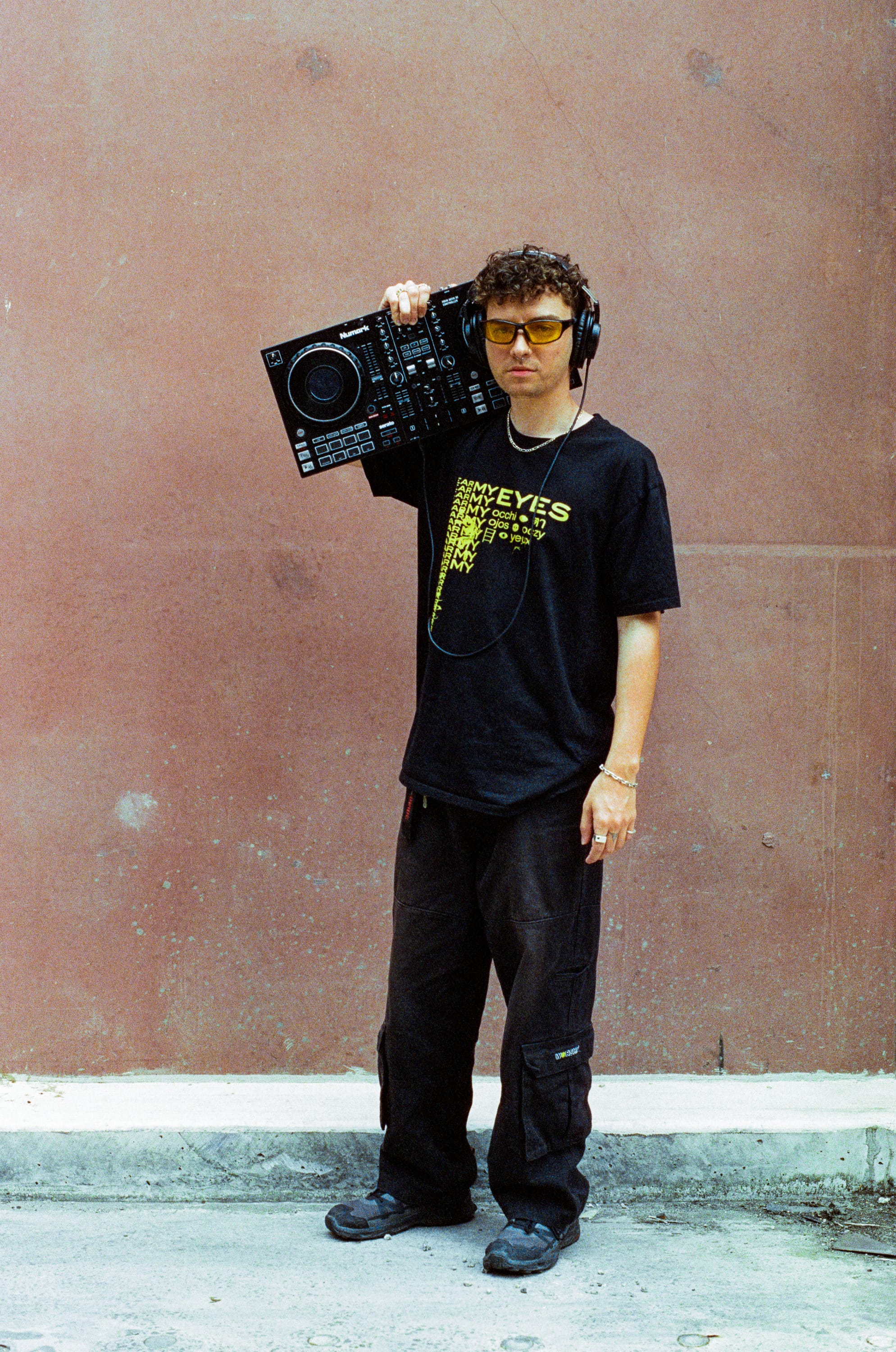
While digging into acid techno and hard house, Isaac realised there was room to specialise in that sound. After three years working in the electronic scene, they released makings of me in 2025, a thumping seven-track acid EP saturated in fluorescent energy.
‘I’m proud of my identity as an Indigenous artist and I want to be able to share that with people, but also I want to be a sick artist. I want people to be able to groove to my music.’
More than a dancefloor record
He considers the EP a ‘biography in a way, like a therapy, or a journal. My music is based on how I’m feeling that day, and the emotion just shows itself without me having to deeply focus on it. I usually try to make three songs a week, and for this EP I had produced over six months and had 60 to 70 tracks, so I cherry-picked ones that worked together.’
The opening track ‘ur outta time’ feels like being rushed, with an impatient tension in the bassline like an anxious heartbeat. He calls it ‘overstimulating’, and says ‘it has that rolling vibe’ that makes it feel like you’re being pushed. EP standout ‘oh, now you want me’ hits harder, and its heavier sound feels like it’s bracing against the constraints of my headphones.
‘The EP speaks to my position as a fairskin Blakfella, and talks about colonialism and its effects on Mob. That’s what it conveys to me, but some person might listen and hear it in a different light.’
Isaac’s Aboriginal culture runs through the EP. On ‘tjalunkut’, he samples kookaburras, his grandfather’s totem, while on ‘totemic relations’, he warps black cockatoos, his own totem, into a snare. He uses a Zoom mic to record natural sounds and make his own sample packs. While he’s holding it up to the camera, I joke that I’m getting a full studio tour.
The Blak artist box
Isaac knows how quickly the industry can box someone in as a ‘Blakfulla artist’, especially with streaming platforms that, in his words, ‘geofence you into that identity, and your shit doesn’t get shown to new people.’ He still prefers, however, to integrate his culture directly into the music.
‘[They] geofence you into that identity, and your shit doesn’t get shown to new people.’
‘A lot of my live sets I bring out the didgeridoo and play it. I’m proud of my identity as an Indigenous artist and I want to be able to share that with people, but also I want to be a sick artist. I want people to be able to groove to my music.’
(Video: @mayatunova)
That same drive sits behind Blak Label Music, the label he co-founded with Carlos Prince and Mitharu McGoughty. As artists, they found the industry opaque for new starters looking to sign contracts and negotiate royalty splits for the first time. The label helps Blak artists across genres and across the country better understand the industry before signing.
While the label, like most independent endeavours run without corporate money, has slowed down due to burnout, Blak Label Music has been essential in reimagining the way the industry interacts with Blak artists.
‘We got a bunch of grants to create new licensing for Indigenous IP [intellectual property]. There’s a Blakfulla lawyer called Terri Janke, she coined this term ‘ICIP’ which means Indigenous Cultural and Intellectual Property. Sometimes Mob will create music and use songlines from their Mob, which aren’t necessarily theirs to use, it’s the Mob’s, so how do we protect their Mob as well? How do they benefit from the music if it blows up?’
‘We worked with Janke to create new artist contracts around this, and then we consulted with the bigger record labels. We wanted them to take the contracts so when they onboard new Indigenous artists they can protect the art and the Mob.’
They’re now ‘slowly putting the label to rest’, but Isaac hopes its online presence remains as an archive of Indigenous artists operating around Australia, and the community they’ve developed stays strong. He’s hoping down the line he can develop his own label, ‘specifically around electronic music, and not just for Mob but all minorities, queer, women, any minority.’
I ask Isaac if he goes back to Brisbane often, and he compares the Brisbane scene now to ‘Melbourne, but 20 years behind. There’s definitely pockets of stuff happening, but it’s kept to the weekends. In Melbourne you can go out on a Monday night and there’s something on.
‘A couple of my friends in Brissie are into electronic music, and there’s lots of underground stuff happening. A couple of my mates are running underground sewer raves or like in random parklands. I didn’t think Brissie had it in them, but they do, and it’s pretty cool.’
He’s DJ’d at a few festivals and club events up there, but hasn’t yet had the honour of playing a sewer rave.
He has a real fondness for performing at queer parties, where he can play the ‘fun melodic queer bangers’ that he’s developed. ‘The electronic scene is a place for queer people and minorities, that’s where it started. Detroit was a place for Black people and queer people to have a safe place to party, and that root still exists here in Melbourne. There’s a lot of underground events for queer people, and I love a little party. I’ve met a lot of amazing queer and BIPOC people that run events, and now I’m part of that community as well.’
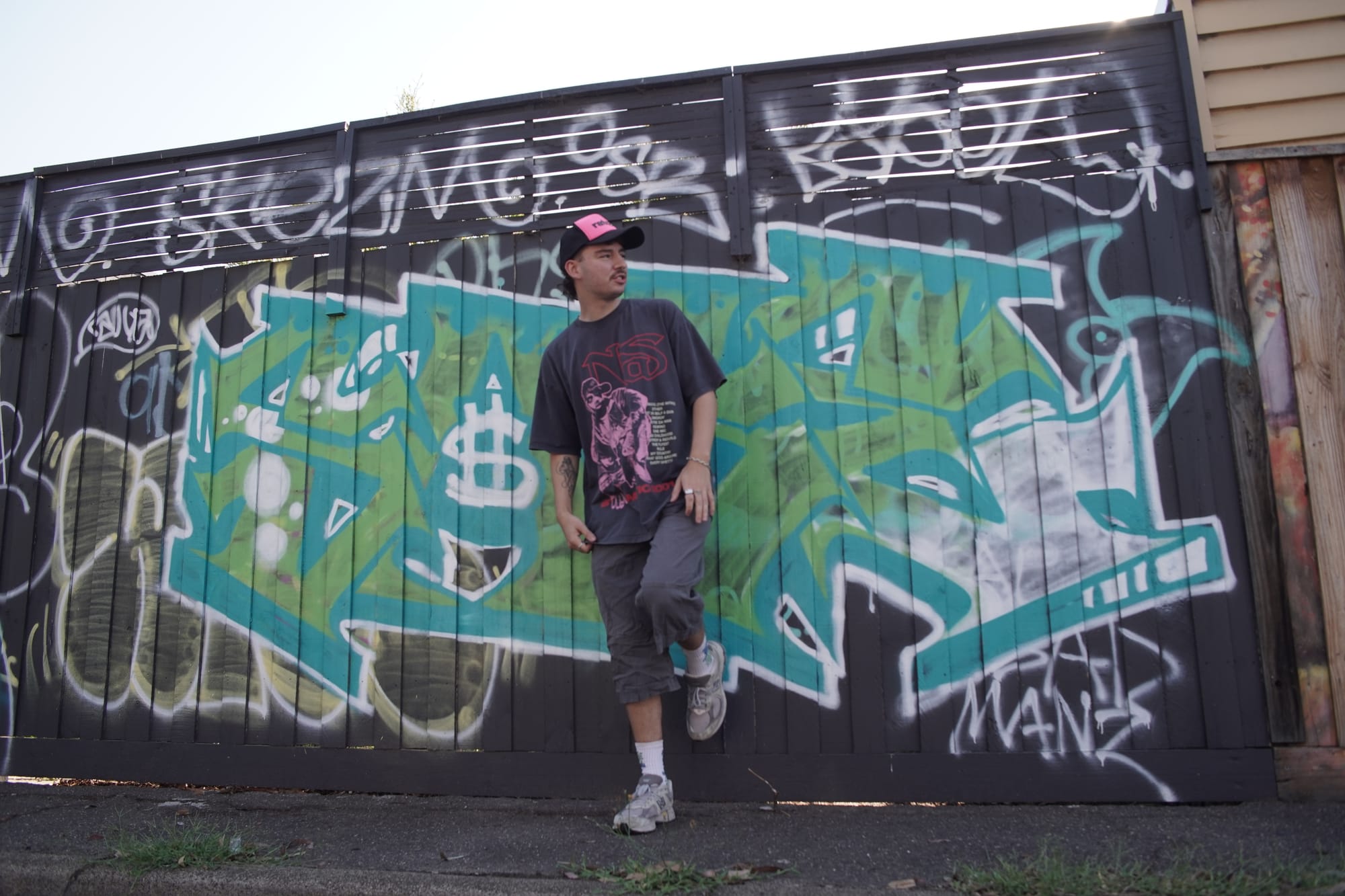
Big festivals are different.
‘There are a lot of white people, and they’re quite young. A lot of these kids don’t have an understanding of where this scene came from, and there isn’t a lot of rave etiquette. At the gigs for the masses, I want to show that the scene came from African American people creating a space for all of us. Learn a bit of respect and know why you’re partying.’
So what’s next for WVCHWY? They’re working on an album, ‘very Prodigy-esque, and I wanna collaborate with Mob rappers. Something very late-90s, Y2K, breakbeat-y, acid-y stuff.’
For now, you’ll probably find them somewhere in Naarm burning up a dancefloor.
Listen to the full EP here:


